

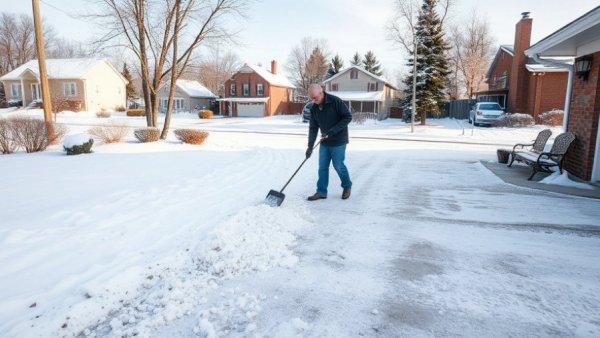
Time to Tackle Winter Safety: Understanding Salt Application
With the winter season upon us, homeowners face a perennial challenge: how to keep their driveways safe from ice and snow. This year, the Centers for Disease Control report a startling statistic—a 35 percent increase in outdoor slips and falls in winter months, driven largely by icy surfaces. It’s crucial to understand not only when to salt your driveway, but how to do it effectively to minimize dangers.
Before the Storm: Pre-salting Benefits
Applying salt before a major snowstorm can work wonders for your driveway and walkways. It's a proactive measure where timing is everything. Experts, such as Angelika Klimorowski, a winter maintenance specialist, suggest spreading salt several hours before the storm. This initial saline barrier prevents the snow from bonding tightly to the driveway surface, making snow removal significantly easier. Just remember—applying too early or before rain can wash it away, rendering it ineffective.
Clearing Snow: The Importance of Post-storm Salting
Once the storm has passed, salting should not be neglected. Immediately after you shovel or use a snowblower to clear your driveway, applying salt can prevent leftover moisture from freezing overnight. "Salt acts as a barrier, stopping ice from forming and ensuring snow doesn’t freeze solid to the ground," Klimorowski emphasizes. This key step can save you time and effort in the long run.
A Dual Approach: Pre and Post-Salting for Best Results
Utilizing both pre-salting and post-salting can provide the best defense against winter ice. With heavy snowfall, Aaron Strickland, owner of Mr. Trim Lawn & Garden Services, recommends both methods. A thin layer of salt before a storm creates a protective coating, while a follow-up application breaks down any remaining ice. However, if the forecast only calls for a minor snowfall, salting after shoveling is usually sufficient and avoids overusage, which can damage driveway surfaces.
How Much Salt is Enough? A Practical Guide
Proper application of rock salt is essential for maintaining your driveway’s surfaces over time. A guideline shared by experts indicates that a 12-ounce coffee mug filled with salt can cover up to 1,000 square feet effectively. It’s important to space salt grains—leaving about 3 inches between each pour—to avoid concentrated spots that can damage both pavement and the environment. Tools like handheld spreaders can help ensure consistent distribution, a point Strickland emphasizes for larger areas.
Alternative Options for Extreme Cold
Rock salt’s effectiveness wanes at temperatures below 15 degrees. In sustained cold spells, homeowners might want to consider alternatives—such as calcium chloride or magnesium chloride—that continue to work in sub-zero conditions. Klimorowski highlights that the right choice can make a big difference in keeping your property safe. If conditions become particularly brutal, switching may be necessary to maintain safe access to your home.
Conclusion: Proactive Measures Lead to Safe Surfaces
As winter progresses, understanding the best practices for salting your driveway can prevent accidents and save money in the long run. By applying salt strategically, homeowners can combat the dangers of icy walkways and ensure their properties remain safe for all. Stay vigilant this season!




Write A Comment