

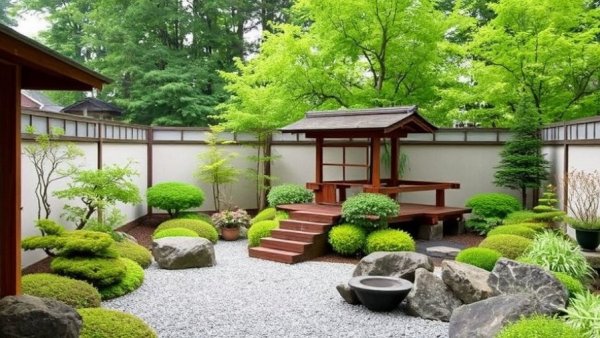
Transform Your Outdoor Space with Japanese Garden Landscaping
In a fast-paced world, the need for serene spaces in our homes has never been greater. Japanese gardens epitomize tranquility, enabling us to reconnect with nature in our outdoor areas. With their profound philosophical roots and an aesthetic appealing to the senses, these gardens invite us to slow down and breathe deeply. Here, we explore ten innovative Japanese garden landscaping ideas that can transform any outdoor space into a calming sanctuary.
Create a Winding Japanese Garden Stone Pathway
Start your journey by crafting a gently winding stone pathway. Unlike straight paths that reveal everything at once, a curved pathway piques curiosity, enticing visitors to explore the garden further. Using natural, irregularly shaped stones, you can create a path that harmonizes with its surroundings. Pair it with soft ferns and ornamental grasses that soften the edges, making the garden inviting and warm.
Incorporate a Soothing Water Feature
Nothing evokes a sense of calm like the sound of water. Adding a small pond, a flowing stream, or a traditional stone water basin enhances a Japanese garden immensely. A pond surrounded by carefully placed rocks and greenery can serve as a stunning focal point. For smaller spaces, consider a recirculating fountain that blends seamlessly into its setting, surrounded by pebbles and low plants.
Design a Peaceful Japanese Zen Garden
With minimal colors yet rich textures, Japanese Zen gardens offer tranquil spaces that require little maintenance. The karesansui or dry landscape gardens represent nature through gravel and strategically placed rocks, creating harmony. Raked gravel can symbolize flowing water, while rocks can depict mountains, inviting introspection and calm.
Embrace Seasonal Changes with Japanese Maple Trees
Japanese maples are a stunning addition, showcasing vibrant colors through the seasons. Their intricate leaves provide a beautiful contrast to the greenery around them. These trees thrive in well-drained soil and partial sunlight, making them perfect for accentuating specific garden areas.
Use Japanese Stone Lanterns for Focal Points
Stone lanterns are not only functional but enhance the overall beauty of a Japanese garden. Use these lanterns to guide the eye and create focal points within the landscape. When placed along a pathway or near a water feature, they create ambiance during the night, blending tradition with modern outdoor aesthetics.
Create a Private Retreat with Bamboo Fencing
Bamboo fencing adds privacy while infusing an authentic Asian touch to gardens. This versatile material not only serves as a boundary but can be creatively arranged for aesthetic value. Consider adding climbing plants or decorative elements to round out the private retreat feel.
Highlight Asymmetry in Garden Design
Japanese garden philosophy emphasizes asymmetry, which offers balance and tranquility. Utilizing varying heights and distances in plants, water features, and rocks creates visual intrigue and keeps the eye engaged in the garden's beauty. Implementing this design principle allows you to build a unique experience tailored to your space.
Keep Your Japanese Garden Minimalist
The essence of Japanese gardens lies in their simplicity. Keeping open spaces within the garden encourages a sense of peace while providing areas for meditation and reflection. A minimalist approach can include a few select plants, stones, and water, allowing for an uncluttered environment.
Utilize Borrowed Scenery for Space Enhancement
Borrowing views from surrounding landscapes can significantly enhance the sense of space in smaller gardens. Aligning your garden design to complement outside features—such as trees or structures—expands visual depth, creating a seamless flow between your garden and nature.
Establish a Lush Japanese Moss Garden
Moss gardens invite a soft carpeted look and texture that seamlessly integrates with stones and layered plants. Moss thrives in the right damp conditions and can transform ordinary spaces into lush green sanctuaries. By combining various textures, you can craft a multi-dimensional look that captivates the senses.
In summary, creating a Japanese garden at home offers myriad benefits, from personal solace to enhancing property value. Implement even a few of these landscaping ideas, and you’ll cultivate not only a beautiful outdoor space but a peaceful retreat that beckons you to unwind. So, why not start transforming your garden today? By integrating these tranquil elements, you will create an outdoor space that mirrors both the beauty of nature and the calm of a traditional Japanese garden.




Write A Comment